
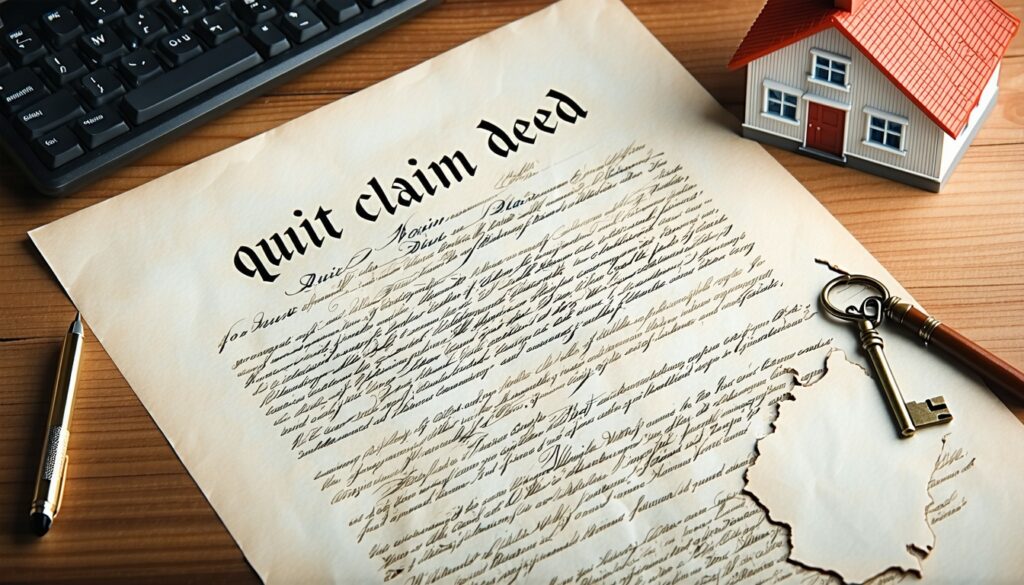
If you’re dipping your toes into property matters in Iowa, you ought to get familiar with quit claim deeds. These little pieces of paper are not just forms; they’re your ticket to transferring property interest. So, whether you’re straightening out who owns what or passing on a property quicker than you can say “home sweet home,” understanding Iowa’s spin on the quit claim deed can save you a load of trouble.
Before you go signing your name all willy-nilly, it’s good to know the rules of the game—like who can play, what they’ve got to do, and how the paperwork flies in Iowa. It’s way too easy for things to get sticky in property deals, so having someone who knows their stuff could be a lifesaver. That’s where we at Law Karma step in. We’re all about linking you up with top-notch lawyers who live and breathe real estate in Iowa. Whether you’re in it for personal reasons or to give your business a boost, the right legal buddy can make the whole process smoother than a baby’s bottom.
Stick with us as we break down this quit claim deed business more. We’ll lay out what makes this deed special, how it stacks up against the others, and when it’s your best bet. By the end of this, you’ll be able to handle property swaps like a pro without breaking a sweat.
- What is a Quit Claim Deed
- Eligibility and Requirements
- How to Prepare a Quit Claim Deed in Iowa
- Filing a Quit Claim Deed
- Benefits and Risks of Using a Quit Claim Deed
- Common Situations for Quit Claim Deeds
- Tips for a Smooth Quit Claim Deed Process
- Frequently Asked Questions
- Schedule a Consultation With a Quit Claim Deed Lawyer
What is a Quit Claim Deed
If you’ve ever tangled with property and real estate in Iowa, sooner or later you’ll stumble upon what’s known as a quitclaim deed. It’s like the lifeline for transferring property rights and interests from one person to another without any of those fancy guarantees. Let’s dive into what makes this document tick, how it’s not quite like its deed cousins, and when you might want to think about using one. It’s all about knowing your deeds!
Definition and Purpose
Imagine you’re handing over a magic key to someone else, but you’re making zero promises about what that key opens. That’s sort of what a quitclaim deed is—it’s a simple piece of paper used to pass along whatever interest or claim you might have on a property. But don’t get too comfy—it doesn’t ensure a thing about the title’s history or status. So, it’s really like saying, “Here’s my share, and good luck with the rest!” It’s a straightforward way to say goodbye to certain property rights.
How It Differs From Other Property Deeds
Picture this: You’ve got the quitclaim deed on one hand and the warranty deed on the other. One’s like going on a blind date, and the other’s like having a full background check in hand. While a warranty deed makes you feel secure about the property’s title and past, like a comfort blanket, the quitclaim deed says, “Here’s my share, no questions asked.” It’s quick, it’s clean, but it doesn’t have a safety net. The focus with quitclaim deeds is purely on what the grantor has right now, not what came before.
When a Quit Claim Deed is Used
So, when does this no-strings-attached paper come in handy? Well, think trust. It’s often used when family or friends are involved—like passing down a house as a gift or sorting things out during a divorce. It’s also a nifty tool for tidying up any title messes without a fuss, maybe something quirky inherited down the family line. Or even for setting up estate plans, allowing land or homes to flow seamlessly without cash swapping hands.
Getting a grip on quitclaim deeds isn’t just lawyer talk—it’s about smoothing out real estate moves without a hitch. Whether you’re in it for family harmony or wrapping up an old title debate, knowing how to wield a quitclaim deed can make your Iowa property dealings as cool and breezy as a Midwestern summer day. Trust me, getting the hang of it will come in handy when you least expect it.
Eligibility and Requirements
In Iowa, wrapping your head around the basics of quit claim deeds is a must for anyone looking to swap property rights or iron out who owns what. Whether you’re shifting property or clearing up ownership, it’s important to know who can use a quit claim deed, what types of properties are included, and the legal stuff you gotta follow.
Who Can Use a Quit Claim Deed in Iowa
Here’s the deal—anyone who owns a property in Iowa, whether you’re flying solo, running a business, or managing a trust, can jump on a quit claim deed to hand over property. This makes for easy and fuss-free transfers without diving into the red tape that other deeds might drag you through.
Property Types Covered
Quit claim deeds in Iowa shine bright when it comes to different kinds of property. We’re talking homes, shops, pieces of land, and even family inheritance can be swapped with these deeds. They work wonders for non-cash deals, like gifting a house to your kid or putting your partner’s name on the title.
But, you gotta be on the ball when filling out the deed. Pinpoint exactly which property you’re transferring and jot down a precise legal description. Sloppy details can lead to headaches when it’s time to record the deed.
Legal Requirements and Restrictions
Sure, quit claim deeds make property transfers a breeze, but there are some no-nonsense rules to respect in Iowa:
Grantor and Grantee Identification: Make sure both the giver (grantor) and the receiver (grantee) are clearly named in the deed.
Notarization: For the quit claim deed to hold any water, it needs a notary’s stamp. This step is all about affirming that everyone’s signature is above board.
Legal Capacity: Everyone involved in this deal needs to be in tip-top legal shape. That means you’re of legal age and you know full well what you’re getting into.
Consideration: Even though you typically don’t swap money with these deeds, sometimes you’re asked to trade something of value to give the deed some legal clout.
By getting a handle on who can use a quit claim deed and the hoops you need to jump through, you’ll be swapping property with ease. Given how sticky legal stuff can get, it’s wise to buddy up with a real estate lawyer before diving into a quit claim deed. Curious about the top real estate lawyers in Iowa? Head over to our article on best real estate attorneys in Iowa.
How to Prepare a Quit Claim Deed in Iowa
Thinking of sorting out a quit claim deed in Iowa? Let’s walk through the essentials so you can get it right the first time and sidestep the usual blunders.
Step by Step Guide
Get the Deed Format Right: First, you gotta make sure your quit claim deed ticks all the legal boxes in Iowa. Who’s transferring to who? Spell it out, along with the official property description and any money swapping hands.
Pin Down the Details: Fill everything out with precision. Triple-check names, property info, and all that jazz—mistakes here can mess up the whole deal.
Lasso a Witness and Notary: Don’t forget, an Iowa quit claim deed won’t fly without witnesses and a notary. Line up these folks to make it official when the grantor and grantee are around.
Seal the Deal: Everyone’s signed? Great. Now, get it dated and stamped by your notary. This step is non-negotiable for making it stick legally.
Keep a Copy Handy: After everything’s signed and sealed, stash some copies where you won’t lose them. A little bit of paranoia here goes a long way.
Required Information for the Deed
When you’re setting up a quit claim deed in Iowa, some info is non-negotiable:
Names and Addresses: The full legal names and addresses? Yeah, you need those for grantors and grantees.
Property Description: Legal description, folks. It’s gotta be spot-on and match what’s in the existing property records.
Consideration: Got cash involved? Note how much or if none, make that clear. Even if it’s just a token amount, write it down.
Notary Acknowledgment: Iowa won’t recognize the deed if it’s not notarized. So, make sure this part’s filled out neatly.
Grantor’s Signature: The grantor publicly swearing off ownership? Needs witnesses and a notary to prove it was all above board and voluntary.
Common Mistakes to Avoid
Botched Property Description: Don’t mess this up. Check and recheck property details to prevent nasty legal skirmishes.
Skipping Notarization: No notary, no dice. The deed won’t hold up unless a notary stamps it.
Missing Autographs: Make sure everyone involved signs on the dotted line—or kiss validity goodbye.
Ignoring the Legalities: Iowa’s got rules, strict ones. Flub any of these, and your deed may end up rejected or open to future challenges.
Follow the above steps and you’ll whip up that quit claim deed in Iowa like a pro. If this stuff gets too knotty, don’t hesitate to give a shout to a real estate attorney for some expert advice.
Filing a Quit Claim Deed
So, you’re thinking about kick-starting a property transfer in Iowa with a quit claim deed and aren’t entirely sure where to get started, huh? Well, you’ve clicked on just the right article. Here I’m gonna break down exactly where you need to shuffle those papers, what you’ll pay to do it, and what to expect once you’ve coughed up the cash and signed on the dotted line.
Where to File in Iowa
First thing’s first—grab that paperwork and head over to your local County Recorder’s Office, but not just any office. You need the one that’s home to your soon-to-be-transferred property. This is where the magic happens, where your deed gets all official and cozy in the county’s public record books.
Recording Process Explained
Once your deed lands in the office, the good folks there give it a once-over. They’re checking to make sure everything’s up to snuff legally and that you’ve dotted the i’s and crossed the t’s. Then they sign off, plunk it into the county system, and you’ve got yourself a part of the official records, complete with its own little public access label.
Costs and Fees for Filing
Don’t pull out a loan for this, but yeah, it’ll cost you a bit. The fees aren’t one-size-fits-all and vary by county, but the tab depends on how long your deed is and if you’ve got extra papers to throw in the mix. Ring up the County Recorder’s Office for the skinny on fees specific to your situation.
Here’s a casual glance at what you might be shelling out:
| Item | Cost |
|---|---|
| Quit Claim Deed Filing Fee | Around $XX |
| More Pages? Yep, They Count | $XX each |
| Want Copies? | $XX each |
What Happens After Filing
Once you’ve filed, the deed joins the “official records” club and you get a copy of this newly minted document. This is your bona fide, legally-backed proof of the property switcheroo. It’s like a trophy saying, “Yep, I own this now.”
Your recorded deed isn’t just paperwork; it becomes a chapter in the public property chronicles, open for any curious minds wanting to peek at who owns what. Keep that copy tucked somewhere safe and sound because it’s not just official—it could save your bacon if there are ever questions about the property transfer.
So, you see, understanding where to file, how much you’ll be dropping, and what happens after you’ve filed the deed is the golden ticket to a smooth property hand-off here in Iowa. Make your process hiccup-free by knowing what’s what, and if you’re in over your head, maybe tap a good real estate attorney. They can sort out any tangled mess you might find yourself in and help keep things rolling smoothly!
Benefits and Risks of Using a Quit Claim Deed
Thinking about using a quit claim deed in Iowa? Let me walk you through the perks, pitfalls, and when it’s smart to get a lawyer involved.
Benefits for Property Owners
For folks owning property in Iowa, a quit claim deed can be a nifty tool. This paper lets you pass on your property rights faster than the usual, more tangled up methods. Here’s the scoop on why it might be your go-to option:
| Why Use a Quit Claim Deed? |
|---|
| Smooth and Quick Transfers |
| Handy for Less Formal Deals |
| Easier on the Nerves Than Warranty Deeds |
| Change Owners Without the Hassle |
Using this deed helps you swap or share property ownership without the usual red tape. It’s super handy for all sorts of situations.
Potential Risks to Consider
Before you rush in, it’s important to keep an eye out for what could go wrong with a quit claim deed in Iowa. There are a few things that might bite you if you’re not careful:
| What Could Go Wrong? |
|---|
| No Promise You Actually Own It |
| Surprises Like Hidden Liens or Claims |
| Skinny Legal Protection for Buyers |
Be smart as you use a quit claim deed. It’s not as watertight as other forms, so knowing the potential pitfalls will help you make smart choices when transferring property.
When to Hire a Lawyer
Sometimes, you can handle a property deal yourself with this deed, but other times, you might need to ring up a pro. Think about getting legal help in these head-scratchers:
- If you’re in a squabble over who owns the property.
- Worried about unknown legal ties on the property.
- Unclear about the legal fine print.
- When dealing with a tangled property transfer involving lots of folks.
Bringing a real estate lawyer into the picture can really help. They’ll guide you like a pro, covering all the corners and helping you sidestep legal traps. With a seasoned attorney, property owners in Iowa can sail through the deal, feeling sure they’re doing it right and protecting what’s theirs.
Common Situations for Quit Claim Deeds
Shifting property ownership can be a breeze or a hassle, depending on the situation. In some cases, quit claim deeds make things a whole lot easier. Here’s a peek at where they come in handy and how they get the job done.
Transferring Property Between Family Members
Moving properties around within the family? Quit claim deeds are your go-to. It’s like handing over the keys without all that real estate hullabaloo. Whether it’s part of estate planning, a gift to someone special, or simply switching ownership within the crew, these deeds keep things simple and drama-free.
Adding or Removing a Spouse
Married, divorced, or anywhere in between—life happens, and sometimes you need to adjust property deeds. Bringing a spouse on board or saying goodbye after parting ways? These deeds adjust who owns what part, making sure the legal side matches life’s twists and turns.
Clearing Title Issues or Clouded Titles
If your property’s title starts feeling murky, a quit claim deed can clear things up. Clouded titles can happen for all sorts of reasons—maybe someone forgot to mention something important, or perhaps borders got fuzzy. Resolve these headaches by setting the record straight with a quick deed swap, making sure ownership is crystal clear.
Selling Property Without Warranty
Selling a property but not making any promises? A quit claim deed lets you transfer what you’ve got with no strings attached. It’s perfect for those situations where you don’t want to vouch for the state of the property or any hidden hiccups. Buyers get the ownership but go in eyes wide open, knowing there are no guarantees.
These scenarios show why quit claim deeds are handy tools, keeping property transactions smooth, legal, and fuss-free. Whether sorting out family affairs, handling life’s changes, clearing up title messes, or hopping into a quick, no-warranty sale, these deeds get the job done with minimal hassle.
Tips for a Smooth Quit Claim Deed Process
Handling a quit claim deed in Iowa isn’t exactly a walk in the park, but with a few key steps, you can make it as smooth as butter. Here’s how to set yourself up for success:
Getting Your Ducks in a Row
Before diving into the quit claim deed adventure, gather up all the needed paperwork like you’re preparing for a tax audit. You’ll want the current deed to your property and any other related legal stuff. Double-check every last detail in your documents—spelling errors or outdated info can throw a wrench in the works later.
Nail the Details
In the game of quit claim deeds, details are your best friend. Make sure all names match exactly and the property description is spot on, because a big mix-up here can cause some serious headaches down the road. If you’re scratching your head over legal lingo or wondering if you wrote grandma’s middle name correctly, it might be time to bring in a real estate attorney for a chat.
Know What You’re Getting Into
Before you put pen to paper, be clear about what you’re signing. Get up close and personal with your rights and responsibilities. Understand what transferring ownership means for you and any risks that come with it. If you’re feeling a bit lost or worried, don’t hesitate to get a pricey coffee with a real estate lawyer—worth the investment for peace of mind.
Get a Lawyerly Buddy
Tackling the legal maze of a quit claim deed solo can be tricky, especially if legal jargon isn’t your first language. A good real estate lawyer can ensure your bases are covered, check for any blunders in the paperwork, and explain what those fancy legal bits mean for you.
Sticking with these tips and getting a pro’s opinion when needed will help you ace the quit claim deed process and dodge any headaches. If you’re hunting for legal help in Iowa, Law Karma hooks you up with sharp real estate attorneys who know their stuff. Need a different kind of legal hand? Check out some of our connections, like Iowa truck accident law firms or Iowa nursing home abuse attorneys.
Frequently Asked Questions
Curious about quit claim deeds in Iowa? Here are some straightforward answers to what folks often want to know:
Can I File a Quit Claim Deed Without a Lawyer
You bet! In Iowa, you can file a quit claim deed without needing a lawyer. But getting it right is key—mess it up, and you could run into legal headaches. If you’re unsure, grabbing a coffee (or a consultation) with a real estate attorney isn’t a bad idea to make sure everything’s up to snuff.
How Long Does the Process Take in Iowa
Ah, the waiting game. Filing a quit claim deed can take a bit of time, usually a few weeks. The clock starts when you’re prepping the deed and ticks until you record it at the county office. It depends on how tricky the ownership issues are and how fast the paperwork flies through the system.
Can a Quit Claim Deed Be Reversed
Once a quit claim deed is all signed and sealed, changing your mind can be a bit of a pickle. It’s like trying to unring a bell—it’s possible, but expect some legal gymnastics to get it done. Best to think it through first, to dodge messy fixes later.
Do I Need to Notify Mortgage Companies
Got a mortgage hanging out on that property? Give the mortgage company a heads-up about the ownership shuffle. This deed doesn’t cut the grantor loose from these financial chains, but it can smooth over the transition and dodge mix-ups or misconceptions down the line.
Navigating paperwork like this can be a maze, so it’s all about knowing your path and keeping things above board. To make sure you’ve got all the T’s crossed and I’s dotted, have a chat with a real estate attorney. They can share wisdom just for your scenario and help guide you through the process without breaking a sweat.
Schedule a Consultation With a Quit Claim Deed Lawyer
Thinking about a quit claim deed in Iowa? Well, you’re on the right track by pondering a chat with a real estate legal whiz. Let’s dive into how to gear up for your meeting, what papers to lug along, and the scoop you should expect on your rights and possible actions.
How to Prepare for Your Meeting
Beforehand, take a moment to jot down your thoughts and any burning questions about your unique case. Here are some tips to get the most bang for your buck out of that consultation:
- Outline why you’re here: What’s the goal? Why’s a quit claim deed on your radar?
- Collect your paperwork: Gather any property documents, deeds, or contracts tied to the property transaction.
- Question time: Scribble down everything you wanna know about the quit claim deed process, legal stuff, and what might happen.
- Note-taking: As you chat, jot down any nuggets of wisdom or legal jargon the lawyer might throw your way.
- Voice your worries: Don’t hold back any hesitations about the process or what hurdles you think might crop up.
Get prepped, and you’ll stroll out with a clearer picture and maybe even a pep in your step about what comes next.
Documents You Should Bring
When popping in to see your quit claim deed lawyer, be sure to have these bits of paper at the ready. They’ll help the lawyer get a grip on your case and give you just what you need.
- Property papers: Stuff like deeds, titles, surveys, and anything else that’s got the property’s name on it.
- ID card: Your driver’s license or passport will do the trick.
- Related chat logs: Any correspondence or deals connected to shifting the property.
- Money stuff: Your mortgage particulars, property tax slips, and financial statements about the property.
Having this stash of docs handy speeds things up and helps the lawyer steer you in the right direction with their advice.
Learn Your Rights and Legal Options
When chatting with your quit claim deed expert, expect to hear about your rights as a property owner and several paths you can wander down when pondering a quit claim deed. They’ll dig into your case, chew over your questions, and give you the 411 on:
- Legal do’s and don’ts: What happens in the legal world when you go down the quit claim deed road.
- Property rights: Your rights and duties as a property owner throwing a quit claim deed into the mix.
- Other moves: Checking out different ways to hand over the property or fix any title itches.
- Risk radar: Sizing up the potential pitfalls of heading down this path and how not to trip over them.
Chatting with someone in the know gives you a goldmine of info on the quit claim deed maze, and you’ll be all set to sort out your property dealings in Iowa like a pro.

How a Des Moines workers compensation attorney helps with job injuries

Why business lawyers in Des Moines help companies grow

Why a truck accident law firm in Des Moines helps crash victims

Why an immigration law firm in Des Moines helps with legal status

Why a probate attorney in Des Moines helps with estates